Divine Insurance Structures and the Business of Survival
- Feb 10
- 6 min read
Updated: Feb 14
There has been a lot of conversation recently about food policy in America. Whole milk is back in schools. Farmers receive government support when prices fall. Families continue to rely on food assistance to get through the month.

At first glance, these topics can feel separate. They are not.
Together, they tell a much bigger story about who our policies protect, where those protections are strongest, and how geography quietly shapes economic equity in the United States.
Let’s walk through it together.
The return of whole milk and what it signals
Congress recently passed a law allowing whole milk to return to public schools. For years, schools participating in federal lunch programs were restricted to low fat or fat free milk under national nutrition standards.
This change may look small. It is not.

Schools are one of the largest guaranteed food buyers in the country. When whole milk was removed from school cafeterias, demand dropped across an entire institutional market. That demand loss was felt most sharply by dairy farmers whose livelihoods depend on stable buyers.
When whole milk returns to schools, demand strengthens. Prices stabilize. Farmers rely less on emergency support. The market is allowed to function more naturally again.
What happens when prices fall anyway
Farming is different from most businesses, and the federal government treats it differently for a reason that goes beyond economics.
Food security is national security.

The United States has long viewed domestic food production as critical infrastructure, alongside energy, transportation, and defense manufacturing. A stable food supply underpins national stability. If food production collapses or becomes overly dependent on foreign sources, prices become volatile, supply chains weaken, and the country becomes more vulnerable during crises.
Because of this, the federal government does not wait for farms to fail before intervening.
Through permanent programs administered by the U.S. Department of Agriculture, safety nets exist to prevent collapse before it spreads. Two of the most important are Price Loss Coverage and Agriculture Risk Coverage.
These programs are designed to activate automatically.
When market prices fall below a legally defined reference price, or when farm or county revenues drop below a historical benchmark, payments are triggered without farmers having to reapply or demonstrate hardship. Once the threshold is crossed, farmers who are enrolled in these programs are automatically paid.
There is no discretionary approval process. There is no waiting period driven by politics or public attention. The system is built to respond as soon as the market signals distress.
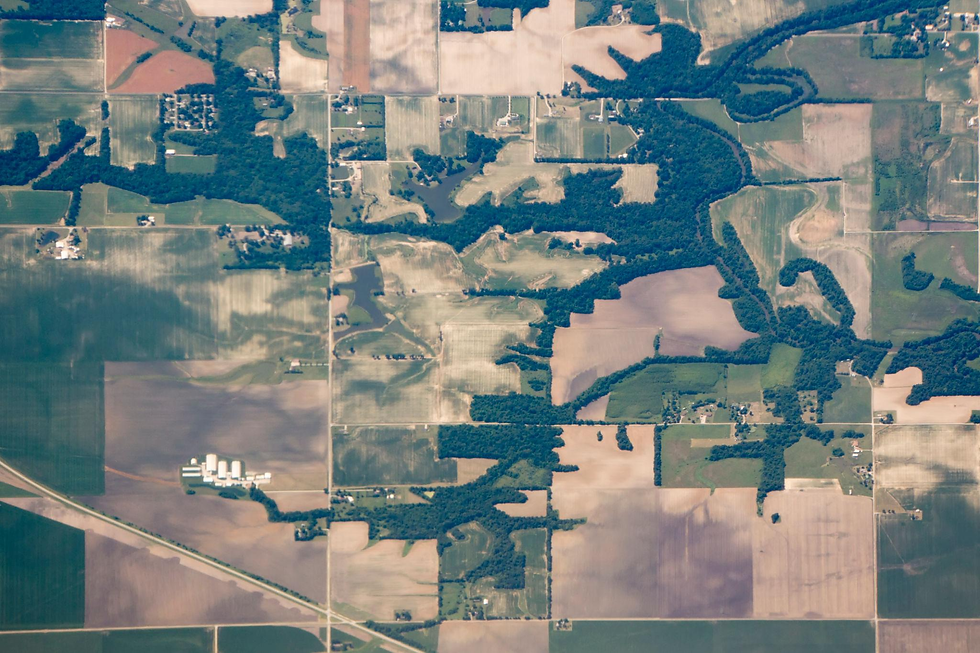
In the most recent fiscal cycle, total direct federal payments to farmers across all major programs including price and revenue supports, conservation payments, and disaster assistance amounted to roughly thirty to forty billion dollars nationwide.
These payments do not require farmers to comply with school nutrition standards or consumer facing health rules. They exist to stabilize production, not to shape diets. So even when whole milk was restricted in schools and demand softened, dairy farmers could still receive support if prices or revenues fell far enough.
This is intentional.

The goal is not to reward inefficiency but to preserve continuity. From a national security perspective, allowing widespread farm failure would be far more costly than stabilizing income during downturns.
In this way, farm safety nets function less like welfare and more like infrastructure maintenance. They exist to keep the system standing so it does not have to be rebuilt after it breaks.
But here is the harder question
Why does farming receive this level of protection when most other small businesses do not?
A daycare center can lose families and close. A grocery store can lose foot traffic and shut down. A trucking company can face fuel spikes and disappear.
There is no automatic price or revenue protection program for them. There is no standing policy that triggers payments when demand collapses or disasters strike. Outside of temporary disaster declarations or short lived emergency relief, comparable automatic safety nets for small business owners simply do not exist.
Rural protection versus urban vulnerability
Farm policy is not only about food. It is about place.
In many rural counties, agriculture is the economy. When farms fail, there is no alternative industry waiting nearby. The federal government treats farming as a cornerstone of rural stability, and that belief is reflected in permanent, predictable programs written into law.

Urban and semi urban communities are treated differently. Policymakers assume economic diversity, workforce mobility, and the ability to pivot. When a small business fails in these areas, the expectation is that the market will absorb the shock.
Instead of stabilizing businesses, the government steps in later to support households through programs like SNAP.
In the most recent fiscal year, SNAP benefits alone totaled just over one hundred billion dollars, providing monthly food assistance to millions of households across the country.
This creates a quiet imbalance.

Rural economies are protected at the production level. Urban low income communities are assisted at the survival level.
Why welfare versus farm support is the wrong comparison
It is tempting to compare welfare spending to farm spending and stop there. That comparison misses the deeper issue.
Food assistance helps families after hardship occurs. Farm programs are designed to prevent economic collapse before it spreads.

One is reactive. The other is preventive.
Both are necessary. But they are not applied evenly across geography or industry.
What this moment reveals
The return of whole milk to schools is more than a nutrition debate. It is a reminder that policy choices can either suppress demand and compensate losses later, or restore demand and reduce the need for emergency intervention altogether.
It also forces us to ask harder questions.
Why do we stabilize rural economies proactively but allow urban small businesses to fail quietly? Why do we treat food production as infrastructure but not childcare, housing, or neighborhood commerce?
These are not anti farmer questions. They are equity questions.
And they deserve honest answers.
Disruption instead of dependency
There is another approach worth naming.
In recent years, Ivanka Kushner focused on an idea that quietly disrupts passive government spending rather than expanding it. Instead of relying solely on subsidies to offset loss, her work around food waste asked a different question.
What if value is being discarded not because it lacks worth, but because the market has not been designed to receive it?

Working alongside Hamdi Ulukaya, the founder and CEO of Chobani, this effort centered on whole harvest sourcing and surplus aggregation. The focus was on redirecting perfectly edible but unsold or cosmetically rejected fruit into new processing markets rather than leaving it to rot in fields.
Chobani became a practical example of how this could work. Surplus strawberries and other fruit that would otherwise have been wasted were absorbed into yogurt production, turning loss into product and waste into revenue. Farmers gained an additional outlet for their crops. The system reduced pressure on government compensation by creating demand where none previously existed.

The result was not a handout, but a new market. Not a recurring government payment, but a restructured supply chain that reduced loss before compensation was ever needed.
This matters because it challenges the assumption that protection must always come in the form of automatic checks.
In this model, innovation itself becomes a form of insurance. Risk is reduced not by paying for failure, but by preventing it through smarter systems, better logistics, and new buyers entering the equation.
It does not replace safety nets. But it asks whether we rely on them too quickly, and whether we invest enough in solutions that reduce the need for them at all.

A call forward
If food security is national security, then economic stability for families and communities must also be treated as essential infrastructure.
It is vital that we continue to invest in educational pipeline programs that prepare young people not only for employment, but for ownership. Pipelines that extend from education into entrepreneurship, into small business grants, into local enterprise that can withstand economic and environmental shocks.
At the same time, we must begin a serious policy conversation about risk protection for small business owners. Not charity. Not emergency relief after devastation. But proactive, predictable safeguards that recognize the reality that many small businesses operate under harsh and disaster prone conditions with no margin for error.
Farmers have long had a form of collective insurance written into law because the nation understood what was at stake. The question now is whether we are willing to imagine a similar form of protection for other essential community builders, so the playing field is not defined by geography alone.
A closing reflection
Food policy, farm policy, and welfare policy are not separate conversations. They are layered systems shaped by geography, risk tolerance, and national priorities.

When we understand that, we stop arguing about who gets more and start asking whether protection itself is being distributed fairly.
That is the conversation worth having.


Comments